



Revival is the part of cryonics where it is tempting to wave a hand and say the future will work it out. That is not good enough, and it is not necessary either.
You can reason about what revival would actually require. Do that, and it sorts into two engineering routes. Neither exists. Neither asks for new physics.
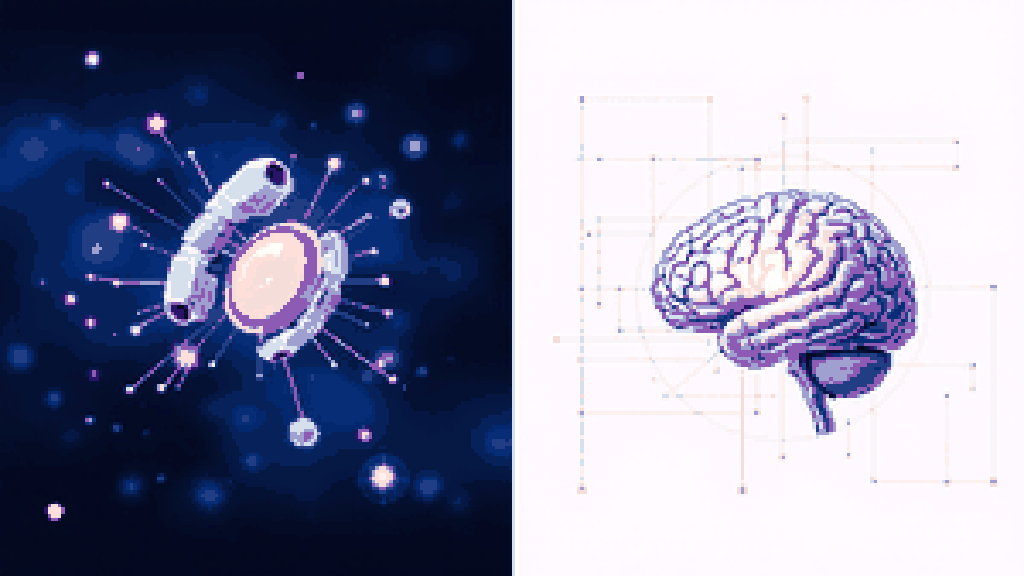
What revival actually has to solve
Start with the requirements rather than the technology. Any route has to clear the same three obstacles.
First, the condition that caused legal death is still present and untreated. Cancer, organ failure, the damage of a stroke.
Second, preservation leaves its own damage. Some ischemic injury accumulates before cooling, described in the race against cellular decay.
More damage accumulates during the procedure itself, at each of the points set out in the technical challenges of high-quality preservation.
Third, the system has to be restored to working order without disturbing the structure that encodes the person.
That third requirement is what makes this an engineering target rather than a fantasy. The claim is not that death is reversible in general.
The claim is narrower: if the information survived, the task is to act on it. A problem of tools, not of physics.
Everything below assumes that condition holds. When it does not, no route in this article helps, which is precisely why the honest position today starts with what preservation cannot promise.
Worth noticing: the three obstacles are independent of each other. Solving rewarming does nothing for the cancer, and curing the cancer does nothing for the ice.
A route has to clear all three, and most confident talk about revival quietly addresses only one.
Route one: repair the body in place
The first route keeps the original biological body and fixes it. Every step happens at the scale of cells and molecules, throughout the tissue.
Clear the cause of death. Reverse the ischemic injury. Remove the cryoprotectants before they turn toxic on warming.
And rewarm fast and uniformly enough that ice never forms on the way up. That is not hypothetical at small scale: rat kidneys have been rewarmed from within and transplanted into recipients that lived on them.
The gap between a rat kidney and a person spans size, complexity, and the repair work above, as the reversibility article sets out.
The most discussed candidate for work at that scale is molecular nanotechnology, machinery acting atom by atom. That is a bet in its own right, and it has its own article.
It is not the only candidate. Engineered cells, advanced biotechnology and targeted molecular tools are all plausible contributors, and none of them requires a general-purpose assembler.
The appeal of this route is obvious. You wake in your own repaired body, with no question about whether the person who wakes is you.
The difficulty is equally obvious. It demands repair tools of a precision and scale that do not exist, deployed through an entire body.
Route two: read the structure and rebuild
The second route does not repair the preserved tissue at all. It reads it.
Suppose the brain's structure could be mapped at sufficient resolution. Sufficient probably means the molecular state of each synapse, not merely a wiring diagram.
That map could in principle be used to grow a healthy biological brain, or to restore function by some other means entirely.
Here the preserved brain is the master copy of the information, and revival becomes scanning and rebuilding rather than surgery.
This route leans on imaging and computation instead of molecular repair, so it fails and succeeds for completely different reasons than route one.
It also raises a question route one does not. If a brain is rebuilt from a map, is the person who wakes the same person?
That is a real philosophical dispute, not a technicality, and honest people land on both sides of it. The Codex treats it directly in mind uploading.
Tim Urban's essay on what makes you you is the best plain-language tour of why the question is harder than it first appears.
Route two is included here because it exists, not because it is proven or preferred. A reader deciding on this should know both routes are on the table.
Why having two routes matters more than either one
The useful fact is not that either route is close. Neither is. It is that they are independent.
Route one could stall on molecular repair while imaging and computation keep advancing. Route two could stall on resolution while molecular medicine matures.
A bet with two uncorrelated ways to pay out is a materially different bet from one with a single point of failure.
Both routes also share the property that matters most. Neither asks for a new law of nature, only for tools nobody has built.
That is the difference between a problem you can chip away at and a miracle you can only hope for.
It is the same stance the field takes toward preservation itself, where progress has come from treating biology as an engineering discipline rather than a mystery.
The trend lines in imaging, molecular biology and computation all point the right way, and the current results are collected in relevant research papers.
Pointing the right way is not the same as arriving. Work aimed at closing these gaps is described in advancing the field.
None of this is a promise. It is a map of the candidate routes, offered so the bet you are making is legible rather than blind.
How long any of it takes is a separate and genuinely unanswerable question, which is the subject of when can we expect revival to happen.
TL;DR: Possible revival routes include repairing the original body or reconstructing a person from preserved brain information. Both remain theoretical and require technologies that do not exist today.
Further reading