


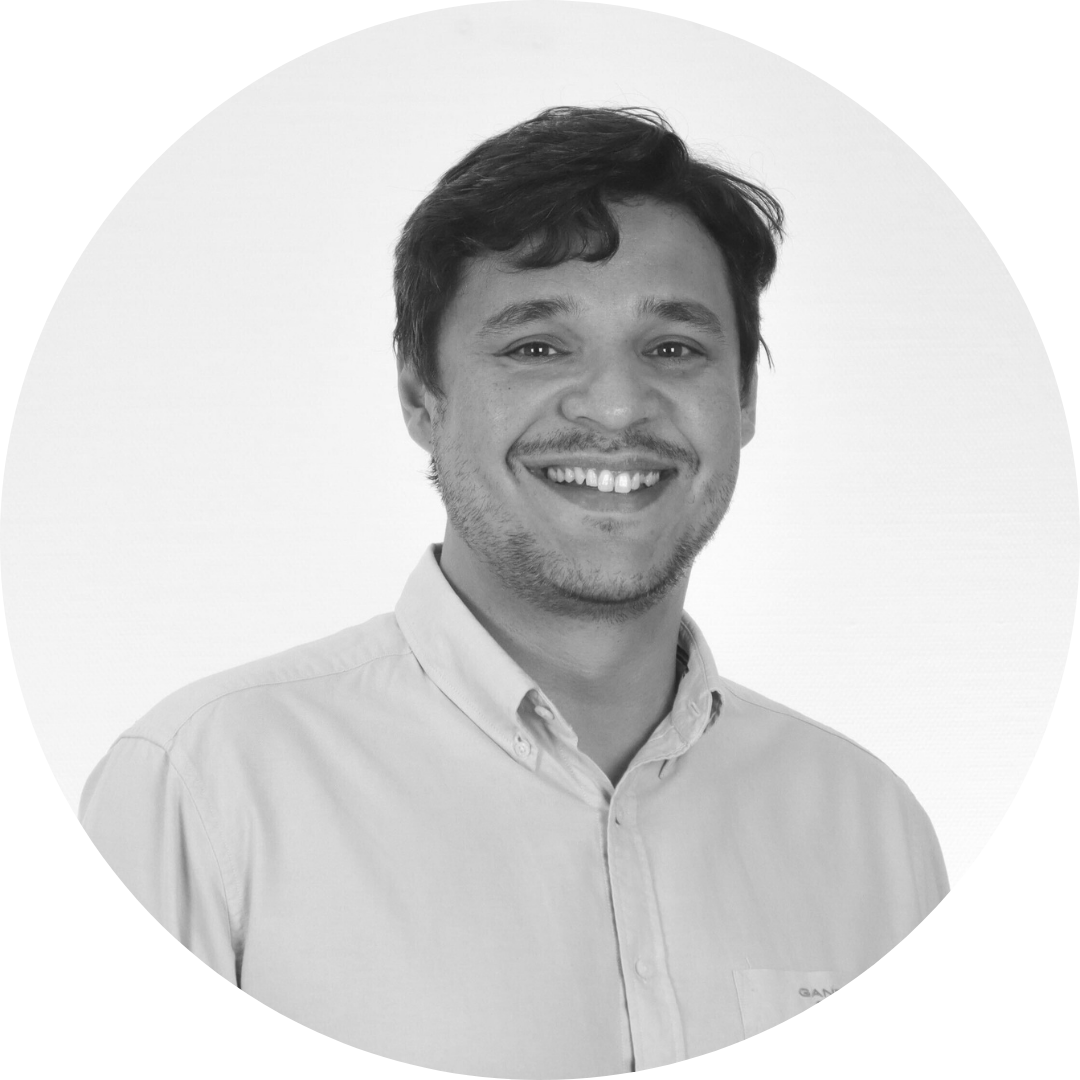
Writing a page called “The founders” about a company I co-founded is a little awkward.
Founder stories can become mythology very quickly. Two people have an idea, overcome impossible odds and apparently build everything with their bare hands.
That is not how Tomorrow.bio happened.
Emil Kendziorra and I founded the company in Berlin in January 2020. We still lead it today, Emil as CEO and me as COO.
We made many of the early decisions. We also depended from the beginning on doctors, engineers, perfusionists, researchers, operations staff and people willing to support an unusual idea.
The founders matter. Of course they do. In a young company, their motives shape what gets built, what gets ignored and what happens when money or time becomes tight.
But there is a second point that matters even more in cryopreservation.
If Tomorrow.bio remains dependent on Emil and me forever, then we have built it badly.
Two reasons to start the same company
Emil and I did not arrive here by the same route.
Emil trained as a medical doctor, graduated summa cum laude from the University of Göttingen and spent several years in cancer research.
He wanted to contribute to life extension. He became frustrated by how slowly that research was moving for people who are alive now.
He then moved into entrepreneurship, founded and sold two companies, and eventually came back to the problem from another direction: biostasis.
His early public commitment was quite direct. He planned to spend at least the next twenty years building a professional and scalable field, combining research, operations, communication and long-term governance.
You can read that argument in his own account of the decision.
My route was less medical and more operational.
I studied civil and industrial engineering in Brazil, started as a planning engineer, moved into technology companies and later co-founded two digital businesses.
I knew how to build teams, manage budgets and turn a plan into something that can work every day. I also knew that I did not want to spend the rest of my life building another ordinary company.
The reason I joined was simpler than any business case. I like being alive.
I wanted to work on something that could give people a chance to have more life. Not certainty. Not immortality. A chance where the normal alternative offers none.
The current biographies and roles are listed on Tomorrow.bio's team page. They explain where we started. They do not explain everything the company has become.
Why the combination worked
Cryopreservation sits in a strange place. It is partly medicine, partly engineering, partly emergency logistics and partly institution building.
A beautiful scientific protocol is useless if nobody can execute it at three in the morning, in another country, after a hospital release takes longer than expected.
A fast operation is equally useless if the medical decisions are poor or the measurements never show whether the procedure worked as intended.
Emil naturally pushed the medical, scientific and field-building side. I naturally pushed operations, finance, growth and the systems required to make the service repeatable.
That does not mean we lived inside two neat boxes.
We argued across them. Good founders should.
Should we build something faster now, or wait for the technically better version? Should we spend on another piece of equipment, another team or another research project?
There is no manual for those choices. Early on, there is not even enough data to make every decision comfortably.
This is where founder motives matter most. When the spreadsheet cannot settle the question, what do the people in charge actually care about?
Our answer has remained the same: preservation quality first, followed by the infrastructure needed to make that quality available to more people.
That priority is still visible in the founders' published focus for 2026, from CT evaluation and electron microscopy to new perfusion and storage work.
It is also visible in the research programme and the engineering projects that moved from plans into operating equipment.
Private conversations with a small group of members added another useful lesson. People often begin by assessing the people behind the organisation.
For some, a direct conversation with the team made the company feel real. Others wanted to see the facility, understand the local operation or find clearer evidence of what was being built.
That is reasonable. Trust often begins with a human interaction.
It just cannot end there.
Founders should build limits around themselves
One of the most important founder decisions at Tomorrow.bio was to avoid putting the entire promise inside one commercial company.
Tomorrow Biostasis GmbH performs cryopreservation, maintains response teams and serves members. It needs to grow, hire, invest and move quickly.
Long-term patient care has a different job. It needs stability, protected capital and a legal purpose that does not change with the priorities of a commercial business.
That is why the Tomorrow.bio ecosystem uses three organisations.
The Patient Care Foundation acts in the interests of patients and serves as legal guardian of their bodies and capital.
The European Biostasis Foundation owns and operates the Swiss facility, provides long-term care and conducts research.
The exact responsibilities are published on our companion organisations page.
This structure was not added after the company became successful. EBF was established in 2019, before Tomorrow.bio was founded in January 2020.
That timing says something.
At the beginning, founders have maximum freedom to keep control. Choosing instead to create separate institutions means accepting that the mission must eventually be larger than the founders.
No legal structure removes every risk. People still have to run it well, fund it, maintain the facility and replace leaders when the time comes.
But structure changes what a future leader can do. It separates growth from patient care and places long-term obligations outside the ordinary commercial balance sheet.
This is the practical difference between saying “trust us” and building reasons for trust that other people can inspect.
What should survive the founders
Emil and I both consider this our life's work. I do not say that lightly.
It matters because difficult years will come. Every serious organisation has them, especially one trying to improve a technology that may take decades to mature.
Personal commitment helps a young company survive those years.
Still, members are not buying our personal commitment alone. They need the company, foundations, facility and standards to survive changes in leadership.
The real founder job is therefore a little paradoxical.
We have to care about the mission as if nobody else ever will. Then we have to build the organisation so it no longer needs us personally.
That means hiring people who challenge us, documenting procedures, publishing case reports, measuring preservation quality and creating governance that can continue without a founder's permission.
It also means building a culture clear enough that future leaders can adapt the organisation without forgetting why it exists.
Organisations meant to last cannot preserve every habit of their first generation. They must preserve the mission while improving the method.
So yes, look at the founders.
Ask why we chose this work, what we built when nobody was watching and whether our skills cover the problem in front of us.
Then look past us.
Look at the team, the published evidence, the legal structure and the facility. Ask what would happen if the operating company failed or if both founders left tomorrow.
If those questions have good answers, the founders have done something useful.
If Tomorrow.bio can only keep its promises while Emil and I are in the room, then our biographies will not save anyone.
Our aim is to build the opposite: a company shaped by its founders, but an institution capable of outliving them.
TL;DR: Emil Kendziorra and Fernando Azevedo Pinheiro founded Tomorrow.bio with complementary medical, scientific, engineering and operational experience. Their commitment matters now, but their most important job is building a team and structure that can keep serving members after the founders are no longer in charge.
Further reading