

Building biostasis: Why I have dedicated my life to cryonics (Part 1)
Twelve years ago when I first made cryonics arrangements, I had very optimistic views on the service I would receive. I did not perceive the unique challenges facing cryonics as an industry and had confidence that I would receive an excellent cryopreservation. I would wake up to a bright future with the continuous progression of science, technology and mankind as a whole. I did not realize there could be a difference in cryopreservation quality from country to country, depending on specific cryonics organizational coverage. I did not consider unexpected or sudden death scenarios. I had not yet considered what could be lostif there wasn’t a rapid cryonics emergency response (SST). I had recently met with local cryonicists in Vancouver, Canada at the Lifespan Society of British Columbia (BC) and the wider cryonics community in Portland, Oregon represented by Aschwin de Wolf and others. In 2011, The Lifespan Society of BC was the first non-profit radical life extension organization incorporated in Canada. I became a member of this organization in 2012. After volunteering for a few years, in 2014, the board elected me to become Executive Director. My roles in cryonics organizations were volunteer in nature as I also worked other jobs and ran businesses.
I met my (now husband) in 2014 at The Lifespan Society of BC, he was also a cryonicist and we shared many core values and had much in common. We had actually signed up around the same time but didn’t know each other very well until later that year. My husband was a founding member of Lifespan. We got to know each other through legal activism and group activities.
The Lifespan Society of BC was originally brought together by the threat of a law specifically designed to target cryonicists. We lived in a province with an unclear and unfavorable legal framework. In the Funeral Interment Services Act which governed funeral law in BC, there was a law prohibiting the sale of cryonics. I won’t go into the details of this law because it is a lengthy issue that has been extensively covered in previous articles and writing. More information can be found on the Lifespan Society of BC website. A summary can also be found here. We spent four years fighting this law in civil court. Finally, we did achieve clarity and we were granted written permission from the government to provide cryonics services under our non-profit organization. The Lifespan Society of BC was dedicated to assisting cryonicists regardless of the company they were signed up with. The Lifespan Society of BC had both Alcor Life Extension Foundation (Alcor) and Cryonics Institute (CI) members.
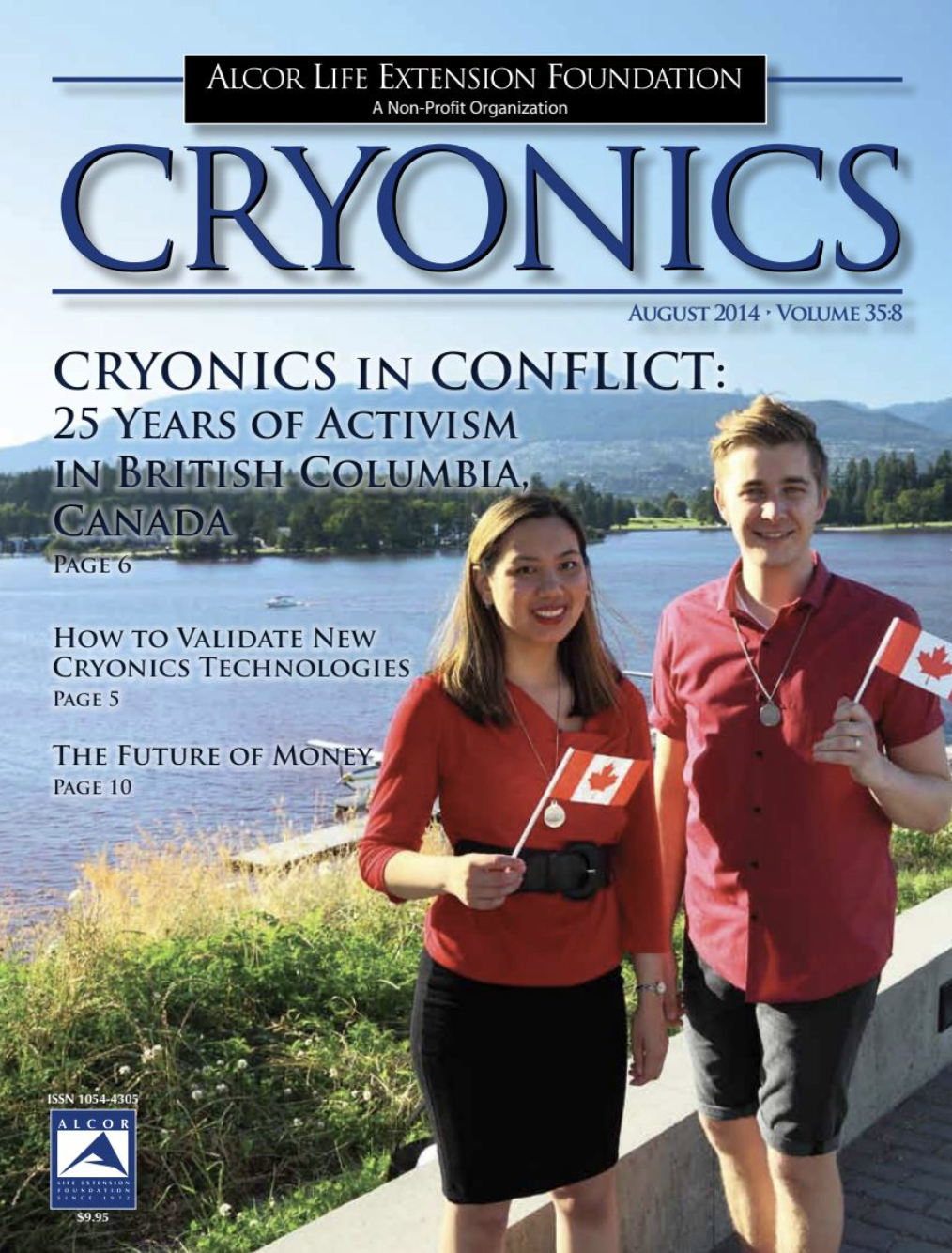
The unique challenges we faced brought us together as a group. Other cryonicists in America and in other parts of Canada did not have the same legal restrictions. It was through this process of activism and direct action that made me think more deeply about what was needed in a true emergency.
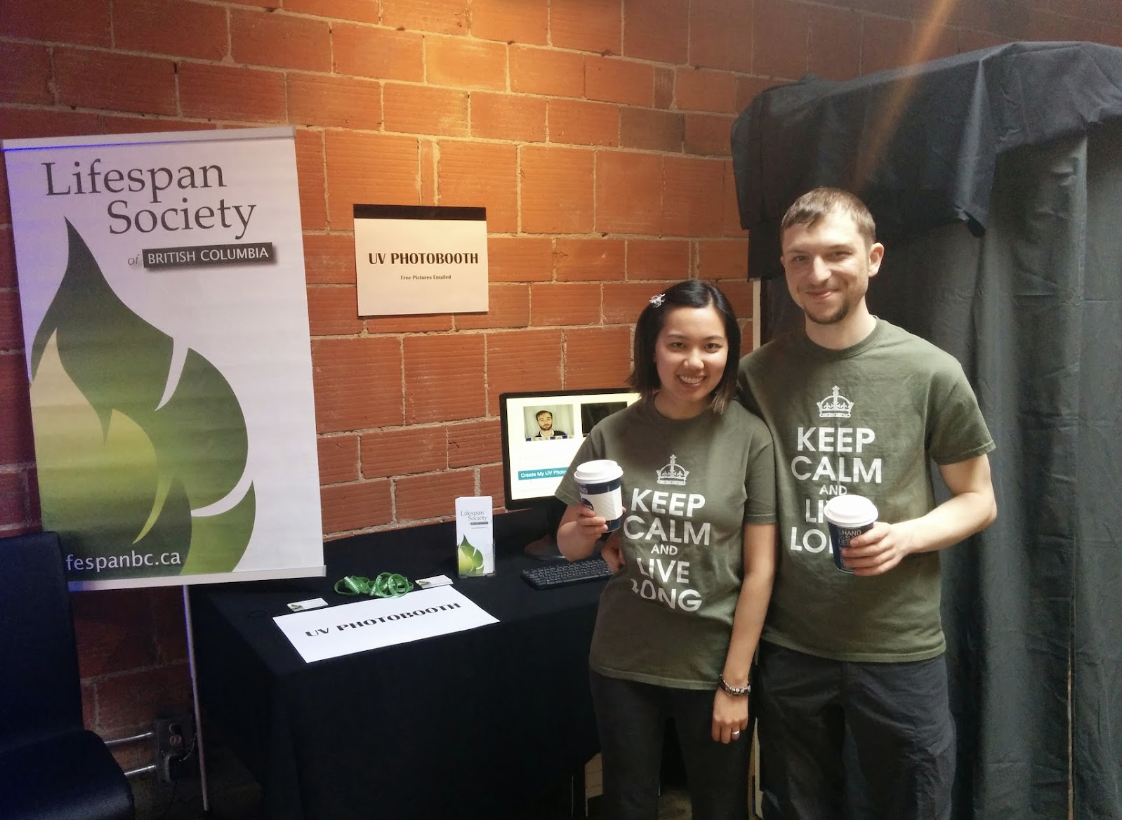
The next steps
Now that we had ensured we had the right to provide assistance to local cryonicists, we thought more practically about what was needed. Transport of persons after legal death has differing requirements from state to state and from country to country. It is a logistical and organizational quagmire. After gaining further experience we realized that due to the small size of our industry, it was not yet a “turnkey operation”. We could not simply sign up and expect everything to be figured out. We were not simply consumers, we were pioneers. It would be another 5 years before Tomorrow Biostasis came into existence and there were only a handful of people signed up in all of Canada. The main organizations in America were already stretched thin trying to cover their main membership base. Suspended Animation is an experienced Standby, Stabilization and Transport (SST) company that had whole body field washout capabilities but they only served Americans, not Canadians. Alcor did have an in-house team and contractors to handle international cases at the time but all of them required longer travel times to get to cases.
Many nights I thought to myself: “What would happen if someone in our community suddenly died?”
Cryonicists are aware that brain cell death occurs rapidly after loss of oxygen and blood flow to the brain. Every 10 degree drop in body temperature cuts metabolism in half. Rapid cooling and ventilation are required immediately after legal death to ensure a high quality of preservation. I wanted viability to be maintained to the highest standards. There are many steps, procedures and medications involved in a fully executed Standby, Stabilization and Transport (SST) case but I won’t go into full details in this article. The details are more fully explained in the book: Human Cryopreservation Procedures Book By: Aschwin de Wolf and Charles Platt. I was personally drawn to the action or implementation of the best practices of cryonics and specifically the emergency response. Others were more focused on research and development which are very important and critical topics. I thought cryonics research was underfunded but at least we could make incremental progress over time. Long term patient storage and patient care trusts seemed pretty solid and two organizations had been successfully running for 50 years. The emergency aspect of cryonics (SST) seemed like the weakest link in our industry, it was not solved, to me, it was the most challenging aspect. We had to have everything in place and act quickly in an emergency situation with very few personnel and equipment spread out across the entire continent.
Greg Fahy’s rabbit kidney experiments were what convinced me that cryonics was possible. I understood that in small mammal systems, biological viability could be maintained in ultra-low temperatures (below 120 degrees C). Unfortunately lab experiment settings are not real world settings. Someone could pass away suddenly and cryonics service providers (CSPs) may not be able to reach them in a timely way.
Our local meetings centered around practical topics such as Will and Last Testaments, Medical Power of Attorney, Death with Dignity rights and also funeral arrangements (especially for those who had signed up with CI). We had to judge the funeral director's willingness to work with our unusual requirements and requests. Cryonics Institute at the time was very encouraging of local response groups because they had no in-house emergency response team. Alcor did have an in-house response team that could respond to international cases but there could be a delay in case response time if there were any issues crossing the border with bags of medical equipment. In the past, when Alcor Life Extension Foundation had Max More as its President, local groups were encouraged to organize basic emergency responses and protocols. Max is from the UK and he worked with a local SST group: Cryonics UK. This group had been operating for decades and had dedicated volunteers and advanced SST capabilities. They had assisted in a number of cases. There was also a larger and older group in the Toronto, Ontario part of Canada. This group was more advanced than The Lifespan Society of BC as it had more volunteers, it was headed by emergency nurse Christine Gaspar (also president of the Cryonics Society of Canada) and they had access to an Alcor Intermediate Standby Kit.
I could model The Lifespan Society after these existing emergency response groups and achieve their level of capabilities over time. My professional background as a project manager allowed me to excel in social, logistical and legal tasks. The cryonics community has always been fairly open and helpful. The Lifespan Society was granted funds from the Life Extension Foundation (LEF) to pay legal costs in our legal activism but we didn’t have a source of income. I brought a proposal to the board for our society to invest remaining funds from LEF as a source of income. We made enough money in that single investment to purchase an Intermediate Standby Kit from Cryonics Institute
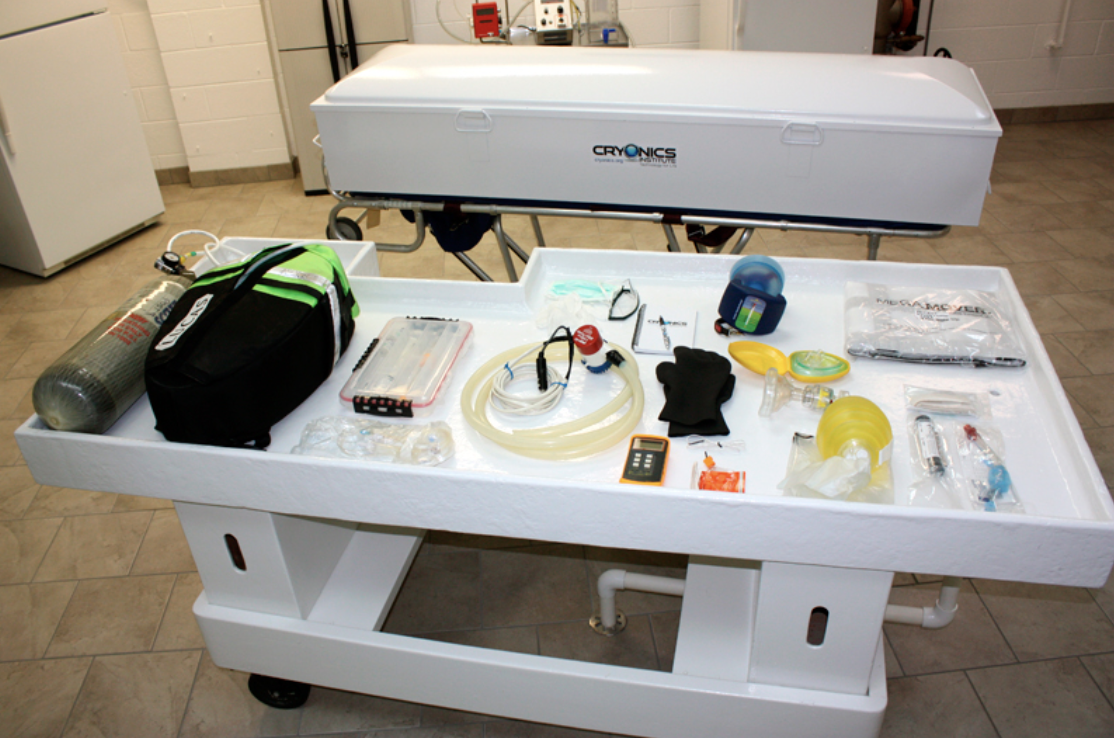
Now that we had the equipment we could organize training to teach others how to use the equipment in SST cases.
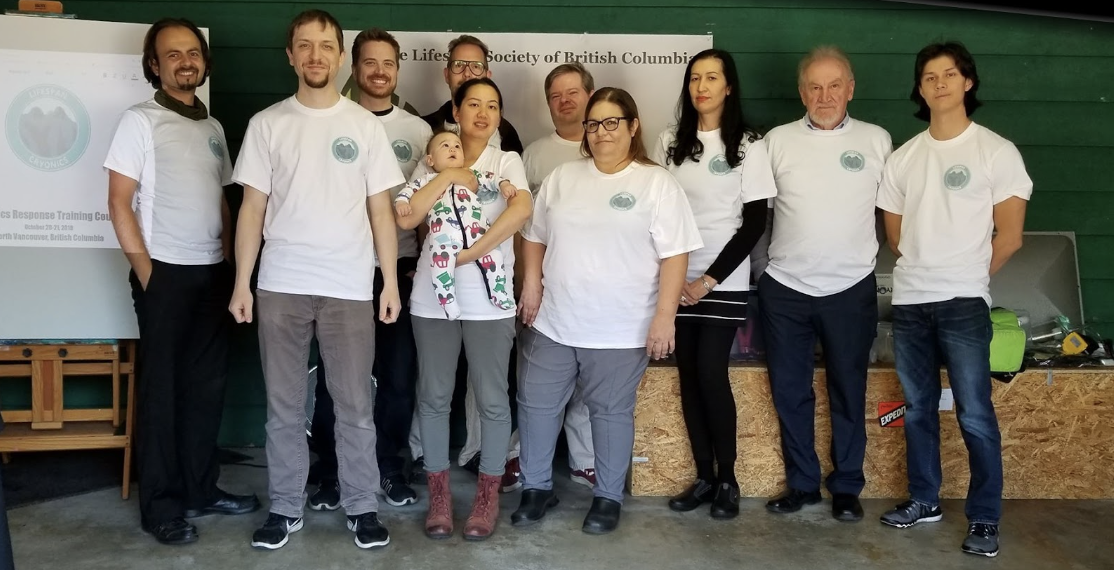
Our first training event was organized in 2018 in the fall when my baby was only about 6 months old. Luke was the main organizer and he did a great job putting together a group of volunteers. We are all wearing custom volunteer shirts that he helped design. The training was led by Cryonics Society of Canada President, Christine Gaspar. Christine had been a registered nurse for decades so her clinical expertise was invaluable.
My work did not stop at the first training, we had ambitions to conduct further training events and to upgrade our Cryonics Institute equipment. I must admit my life had taken a turn when I had my first child and I had become busier with parenting. By the time my second was born it was the start of the COVID pandemic.
Disaster strikes our Community
In February 2020 there were some early warning signs of an impending pandemic. I was not paying close attention as my second child was born in early February. My husband had watched the dramatic clips coming out of China of people collapsing due to a mysterious airborne illness. Our country, Canada, had been struck fairly early and badly by the H1N1 influenza pandemic so this type of deadly pandemic hadn't completely faded from public consciousness. At first, I was a bit skeptical at the magnitude of this pandemic but quickly changed course when my husband presented more evidence to me about the COVID virus being more than just the annual news cycle. I had become cynical over the years about fear mongering in the news. By March 2020 we had removed our son from daycare before any formal shut downs. We started stockpiling masks. We noticed all the East Asian people also stocking up on personal protective equipment fairly early. They had their own network of news through WeChat and other non-western channels that reported more dire warnings than our mainstream news. We were very afraid of our newborn daughter catching this deadly virus.
By April 1st, complete lockdown in Canada had occurred on a legal and institution level. We had already quarantined ourselves since March. While adjusting to a changed world, I receive an email from a Lifespan member’s family member that a Lifespan member was about to imminently pass away. I was completely shocked. Apparently they had cancer for a number of years and despite being a very active member of our small community they didn’t inform anyone of his illness. I felt terrible about this but there were other people in the cryonics community that were closer to them than I was and they didn't know either. I can’t imagine how they felt and how much of a shock it was. By this time, I was the primary caregiver, with little to no outside support because of the pandemic. With my newborn and toddler at home I was not in the best state of physical being. My newborn was colicky and had reflux. I ended up holding her for many hours of the day and developed carpal tunnel syndrome in my wrist. I wore a wrist brace and kept on going.
The Lifespan member passed away in mid-April, at the height of the pandemic and lockdowns.
It was difficult to accept what a bad time this was to face legal death. There were hardly any commercial flights. They were not an Alcor member and they didn’t have a separate international standby contract with another provider. However, they were fairly proactive as a Cryonics Institute (CI) member and had extensive communication about their arrangements with their local funeral home.
The critically ill Lifespan member had made funeral arrangements however the funeral home needed to get his passport. Someone close to them had to search their apartment and find the passport. Without it, they would not be able to be transported to CI. Since we were in lockdown no one was allowed to be in the hospital and the funeral home. It could not be ruled out that COVID was what ended their life. It could be fatal to get personally involved. After a group discussion it was determined by their family members and lifespan society members that a straight freeze on dry ice was the best we could do given the situation. It was too risky for someone like me with a 2 month old to go to the funeral home to try to supervise and ensure enough dry ice was packed. We had to take the word of the funeral director that they would keep them in a deep freeze. This cryonicist was stuck on dry ice for four days before he ended up at CI.
We were all impacted by this event. I felt powerless. Internally, I had a realization that I could not accept this level of care for cryonicists. It was a type of tragedy that was hard to communicate with others. For all our scientific and technical progress at the end of the day we were forced to simply straight-freeze someone and accept this suboptimal situation and our lack of readiness. I told myself I would not accept this and one day I would do what I could to prevent this scenario from unfolding.
There were very few opportunities to create events and meet-ups during lockdowns. However, I had not given up on my cryonics mission. At the right time I would start again.
(Continues)