

Cryonics A-Z: everything you need to know (Part 2)
In part one, we covered what cryopreservation is, why people choose it, and what "dead" actually means in this context. This video goes further: what physically happens, step by step, from the moment we're notified that a member isn't doing well to the moment they're in long-term cryostasis, plus the questions we get asked most: whole body or brain only, and how likely is revival, really.
It starts with a phone call
Every case begins the same way: someone who signed up with us, maybe years ago, maybe recently, reaches out to tell us their doctors have given them weeks or months to live.
From that point, we're in contact with the family and coordinating directly with the hospital and treating doctors, reducing logistical complexity before anything urgent happens. It helps enormously if the family and hospital are, at minimum, not opposed to cryopreservation, ideally supportive. We've had cases where family support made a measurable difference in preservation quality. This is why we ask every member to make sure their family understands they may need to help us coordinate, not with the procedure itself, but with the hospital, the paperwork, and the people around them.
Once a doctor or the member tells us death is likely within days, we dispatch one of our standby teams. This is the reason we maintain multiple cryopreservation ambulances across the US and Europe: we want one prepositioned as close to the patient as possible, with or without a full team attached, depending on distance and timeline uncertainty.
Take a case where our team is based in Switzerland or Berlin, but a member is dying in Portugal. We can't keep a five-person team on-site for months waiting on an uncertain timeline, but we can preposition a fully equipped ambulance early, and fly the team in within hours once things accelerate, rather than driving 20-30 hours.
Once the team and ambulance are on-site and death looks like a matter of days, the full team, doctor, perfusionist, cryopreservation specialist, support staff, goes on standby. Five people is our ideal team size; four works, three is workable, two is genuinely uncomfortable. Everyone stays close and ready until the treating doctors say the end is near, and then we wait for legal pronouncement. We can only begin once that pronouncement happens, and we always advocate for it to occur as close to circulatory arrest as the local legal framework allows.
The cryoprotection procedure
What follows immediately after legal pronouncement is technically called cryoprotection, not cryopreservation, cryopreservation specifically refers to the point where tissue drops below glass transition temperature. Cryoprotection is everything that happens before that.
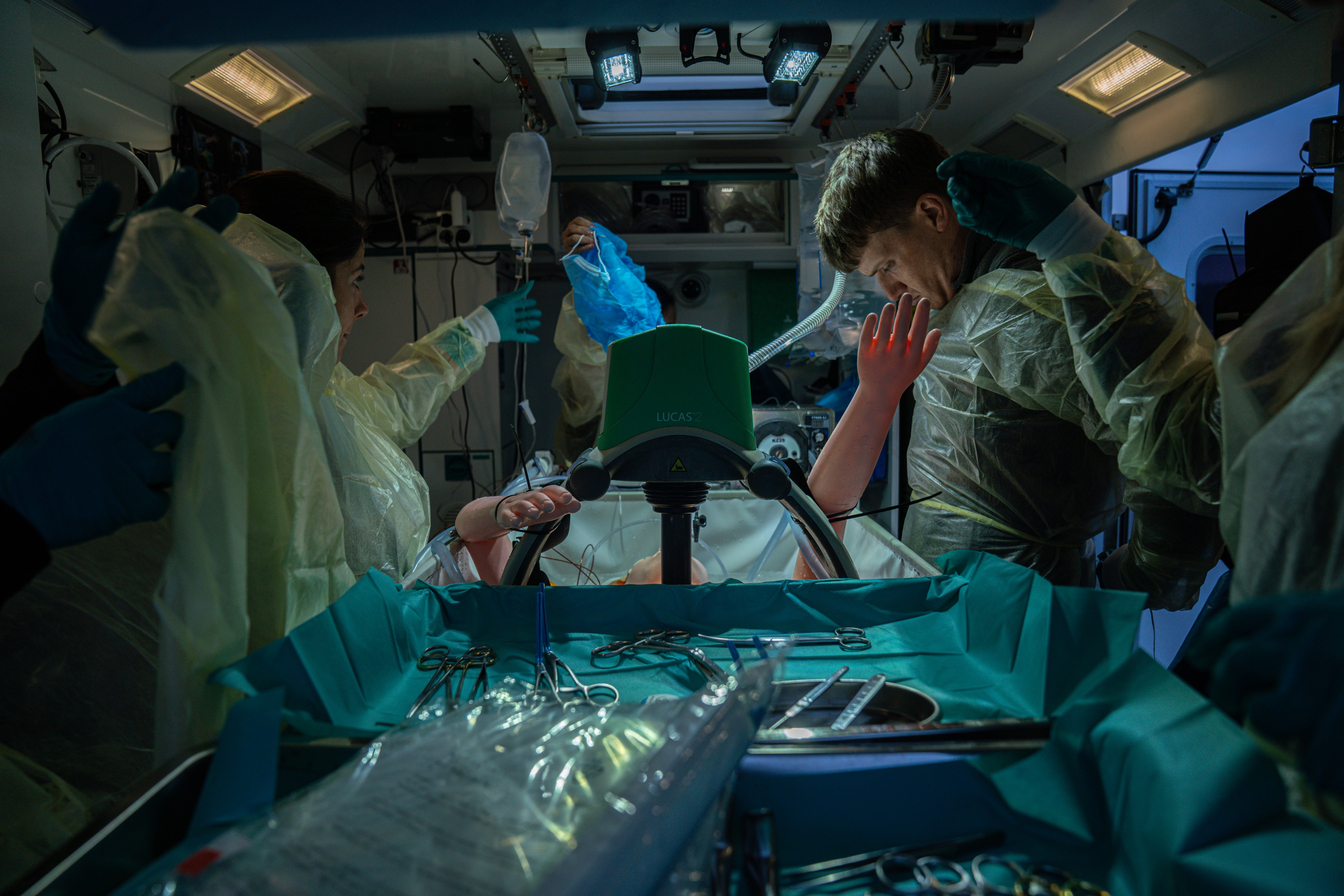
The moment the body is legally released to us, we begin, either bedside or in one of our ambulances, depending on distance and what the hospital permits. The first priority is supporting the body: mechanical chest compressions (never manual), oxygen where appropriate, and a range of medications, most importantly anticoagulants, to keep blood from clotting, alongside others aimed at neuroprotection and improving how well cryoprotective agent will later perfuse through tissue.
At the same time, we start cooling immediately, initially with ordinary ice water circulated around the patient, combined with what we call a cooling mask: a half-helmet that uses the face, skull, and nasopharyngeal space as a cooling surface to bring the brain's temperature down as fast as possible. Throughout, we're collecting data, end-tidal CO2 to gauge how well chest compressions and oxygen exchange are working, continuous temperature monitoring, and more.
Once the body has cooled enough, surgery begins: cannulating a major vessel, typically the ascending aorta, in a procedure similar to open-heart surgery. From there we target the three vessels branching off the aortic arch that supply the brain, the priority organ throughout, even though the rest of the body is perfused too.
This is where perfusion loading happens. We start by washing out the blood entirely, blood clots, and clots block small vessels, using a washout solution, drawn out on the venous side into a bulk storage tank. Then we begin introducing cryoprotective agent, starting at a low concentration (around 2.5% weight per volume) and ramping up slowly. The pacing matters: ramp too fast and the resulting osmotic damage is severe, and cryoprotective agents are also more toxic at higher temperatures, so concentration only increases once the body is sufficiently cooled.
This is done using a heart-lung machine modified specifically for cryoprotective perfusion, roller pumps instead of centrifugal ones, careful pressure monitoring (these agents are more viscous, and excess pressure risks bursting vessels), and constant measurement of cryoprotective agent concentration on the venous side to track how fully the body has equalized.
In short: support the cells, cool as fast as possible, replace blood and water with cryoprotective agent, then continue cooling toward at least -80°C, ideally down toward cryogenic range.
Quality assurance: the metrics that actually matter
Some quality metrics are collected during the procedure itself, when there's still a chance to correct course. Others are collected afterward, when nothing more can be done, but they still matter enormously for improving the field over time.
During the procedure, we track:
- Temperature curves, how quickly the body cools, since faster cooling limits ischemic damage.
- End-tidal CO2, a read on how well chest compressions and oxygenation are performing, useful for catching problems like airway occlusion in real time.
- Refractive index, an optical measurement of cryoprotective agent concentration on the venous side. We want this to rise in line with what's being perfused in, and eventually plateau at a high enough level to confirm the whole body, and critically, the brain, has equalized with enough cryoprotective agent that ice crystals cannot form. If it hasn't plateaued, there's likely still water diluting the agent somewhere in the body, and perfusion continues.
After the procedure, two metrics matter most, and neither can be changed once collected, but both are essential for evaluating how well the case went:
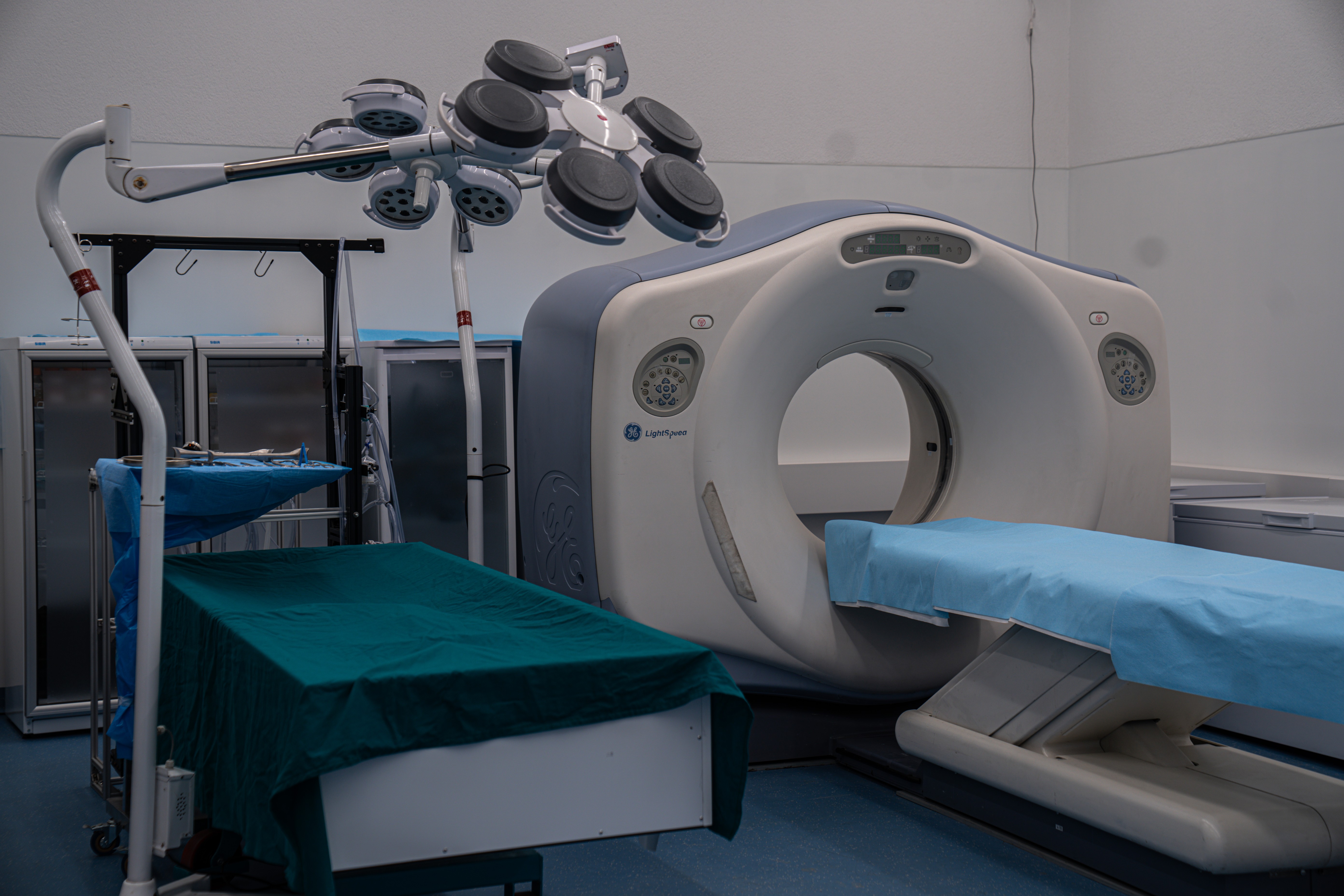
- CT scanning, done on every case, shows how much cryoprotective agent reached the brain and body. Our reports use color-coded scans, red for insufficient agent, through orange and yellow, to green for adequate concentration.
- Electron microscopy, done only with the member's prior consent, examines the fine structure of neurons and synapses at extremely high magnification. It requires a small brain sample, comparable in size to a standard neurosurgical biopsy, and is the single best measure of preservation quality available. More members are consenting to this over time, which is steadily building the field's understanding of what real-world preservation quality actually looks like at the cellular level.
If CT or EM results aren't good, there's nothing to be done for that individual case, the person is already in cryostasis. But the data still meaningfully improves the field, and may eventually inform revival decisions.
Long-term storage
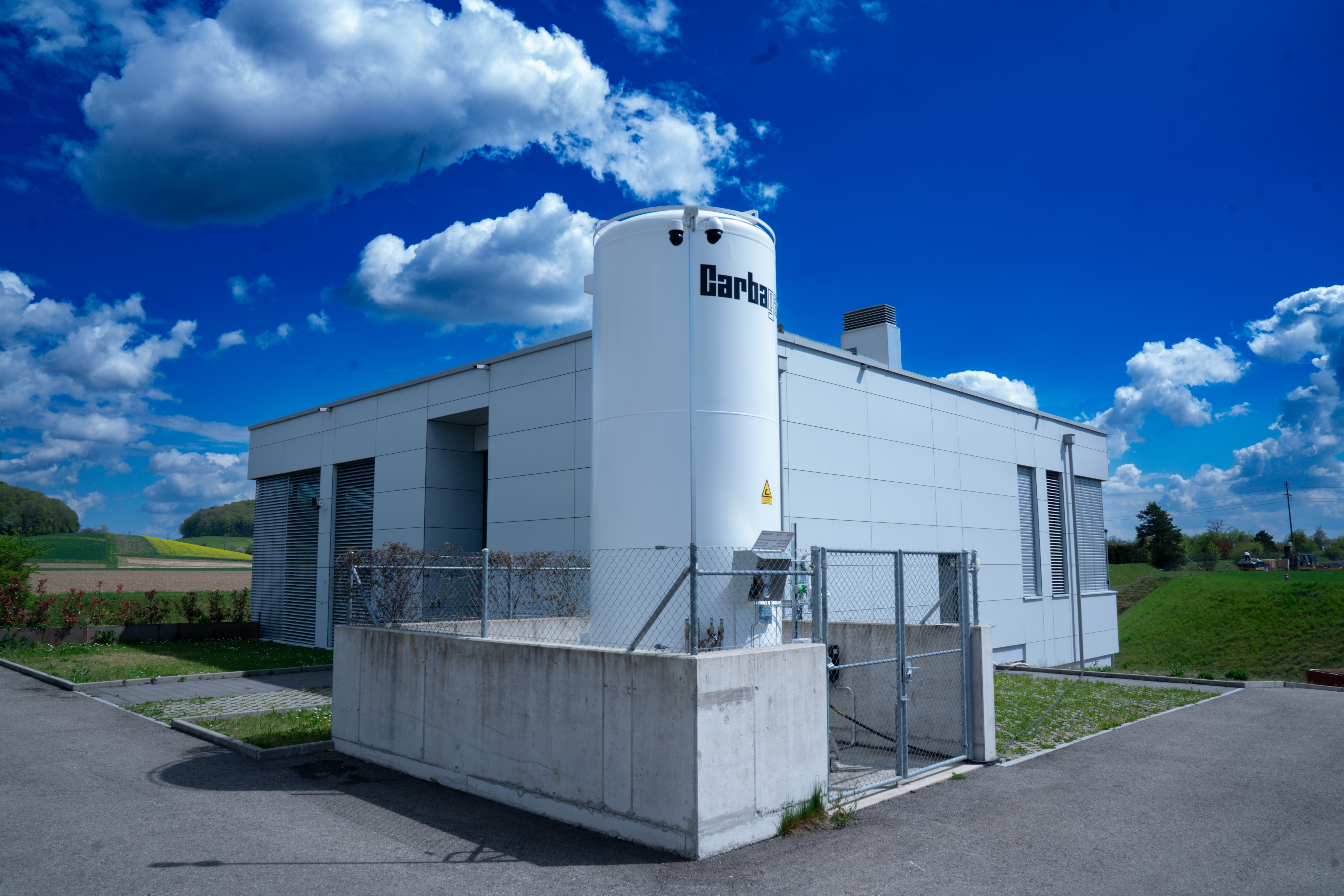
From a technology standpoint, long-term storage is the simplest part of the entire process. Once cryoprotection is complete, the person is cooled the rest of the way and placed into long-term cryostasis, for almost everyone today, at -196°C in immersion dewars: double-walled, vacuum-insulated containers holding multiple people, each in an individual pod.
Cooling to final storage temperature is done carefully: quickly down to just above glass transition temperature, then as slowly as possible from there, over roughly 100 hours, because rapid cooling below that point risks thermal stress severe enough to cause macroscopic cracking, since the body is now effectively a solid, glass-like structure.
People are stored head-down. It sounds unusual, but the logic is simple: in a worst-case scenario, a serious disruption to liquid nitrogen supply, the head, where memory and identity physically reside, stays protected the longest.
New technology is changing this. Intermediate temperature storage (ITS) dewars hold patients around -140°C instead of -196°C, avoiding the additional cooling stress of getting all the way to final storage temperature, while still providing storage security on the order of centuries. We're receiving the world's first whole-body ITS dewars in the coming weeks and will test and roll them out once validated.
Our long-term storage facility sits underground in Switzerland, a country with no meaningful earthquake, flood, or hurricane risk, and strong geopolitical and social stability. We're the first organization with a signed agreement to relocate patients to Southern Cryonics in Australia if something were ever to go wrong in Switzerland, and vice versa, two locations chosen specifically because they carry very different geopolitical risk profiles. Longer term, we plan additional facilities, likely next in the US.
Whole body or brain only?
This comes up constantly, so here's the direct answer: we don't offer head-only preservation, only whole body or brain only.
Our default recommendation is whole body. Not because we have strong evidence that anything relevant to consciousness or identity resides outside the brain, but because it's the more conservative choice. If organ 3D-printing or similar technology eventually makes reconstructing the rest of the body straightforward, whole body preservation costs you nothing extra in the future, whereas choosing brain-only forecloses that option if it later turns out having the whole body made revival easier or cheaper.
The one legitimate reason to choose brain only is cost. Brain preservation and long-term storage run under €100,000, versus roughly €200,000 ($220,000) for whole body, largely due to the storage volume required. If funding isn't a constraint, we recommend whole body, and it's what most of our members choose.
Procedurally, the two are nearly identical. We always perfuse through the ascending aorta, which reaches all four vessels supplying the brain (both carotids and both vertebrals) regardless of whether it's a whole body or brain-only case. The only difference: in brain-only cases, the brain is extracted at the very end and that is what's cooled to storage temperature.
How likely is revival, honestly?
We don't know. And we won't know for years, likely decades, until revival is actually demonstrated.
We can't offer a probability, because reviving someone from cryostasis isn't currently possible at all. We understand a great deal about how memory and identity are encoded in the brain, but not enough to responsibly attach a number to this. Opinions among serious researchers in the field range from close to 100% down to under 1%, a genuinely wide spread. The only claim we're comfortable making: the probability is higher than zero, and higher than the alternative.
Our job, as we see it, is to keep pushing that probability upward, scientifically, procedurally, and logistically, for as long as it takes. Until revival happens, "we don't know, and it's better than zero" is the honest answer, and it's the one we give every member.
How revival might actually work
Everything here is speculative, worth saying clearly, up front. But there are a few conceptual frameworks worth knowing, most thoroughly explored in Ralph Merkle and Robert Freitas's roughly 700-page technical treatment of the subject, which lays out a detailed (if dense) blueprint for how reversal might eventually work.
Broadly, there are two or three plausible paths:
Fully reversible suspended animation. If cryoprotective agents become dramatically less toxic and cooling/rewarming methods advance enough, the process could eventually resemble what we do today, but with agents that cause negligible damage, cool down fast, warm up fast, wash out the agent, and the body simply restarts: oxygen and nutrients resume, the heart is shocked into rhythm, and cellular processes re-synchronize on their own. This is not, by our current understanding, what will happen for people preserved with today's technology, current cryoprotective agents and cooling methods aren't yet good enough for reversal without repair.
Repair via advanced nanotechnology. For people preserved with current-generation methods, some degree of cellular repair will likely be necessary during rewarming, addressing ice crystal damage, membrane repair, and similar cellular-level issues, most plausibly using very small-scale repair mechanisms deployed throughout the body in enormous numbers. It sounds close to science fiction today, in the same way smartphones would have sounded like science fiction a few generations ago.
Cellular replacement. In cases of more significant damage, some cells might need outright replacement, synthetic or artificial cells substituting for damaged biological ones. This is the furthest end of the spectrum, edging fully into speculative territory, but it's at least conceptually mapped out.
The honest summary: we have a rough, if speculative, sense of what revival might eventually require. We don't have a timeline, and members go into cryostasis understanding that clearly. What we can say is what we've said throughout, the chance is real, and it's better than the alternative.
Signing up
If you've read this far and you're considering signing up, the process is the same as we outlined in part one: membership (€50/month, covering trained standby teams and access to our life-extension program, with means-tested pricing available for students or anyone going through a difficult financial period), plus funding in place for the procedure and long-term storage itself - €200,000 for whole body, €75,000 for brain only, arranged through life insurance or another funding method, with a last will and patient advance directive rounding out the paperwork.
Reach out to us, and our team will walk you through the rest.
And if you prefer the video