

Lifespan Extending Supplements
In case you are overwhelmed with a media rain of supplements which are meant to extend your lifespan, keep in check your body's reservoir of micronutrients, metabolites, and defense systems, you are not alone. In the following article, we summarize the research on 5 most promising supplements.
The effect of each supplement on lifespan is varied: some have a big effect on cardiovascular or cardiometabolic health, some support brain health, and others prevent sarcopenia (muscle mass loss), which is key in preventing bone fractures in older individuals. Some supplements exhibit protective roles on telomere-shortening and epigenetic clocks, two key hallmarks of aging (Lopez-Otin et al, 2023). Telomeres are the protective caps on chromosomes that shorten with each cell division, eventually triggering senescence or apoptosis when critically depleted.

Introduction
Omega-3 (ω-3) fatty acids are polyunsaturated fatty acids, which means they contain multiple carbon-carbon double bonds. As part of phospholipid “tails”, the double bonds present as “kinks” which increase membrane fluidity and defenses against oxidative stress. The three omega-3 fatty acids involved in human physiology are ALA, EPA, and DHA. ALA is an essential fatty acid, as our bodies cannot synthesize it; from ALA, EPA and DHA can be synthesized, though this conversion process is inefficient. ALA is commonly found in plant sources such as flax seeds and soybeans, while DHA and EPA come from oily fish such as salmon, mackerel, and sardines.
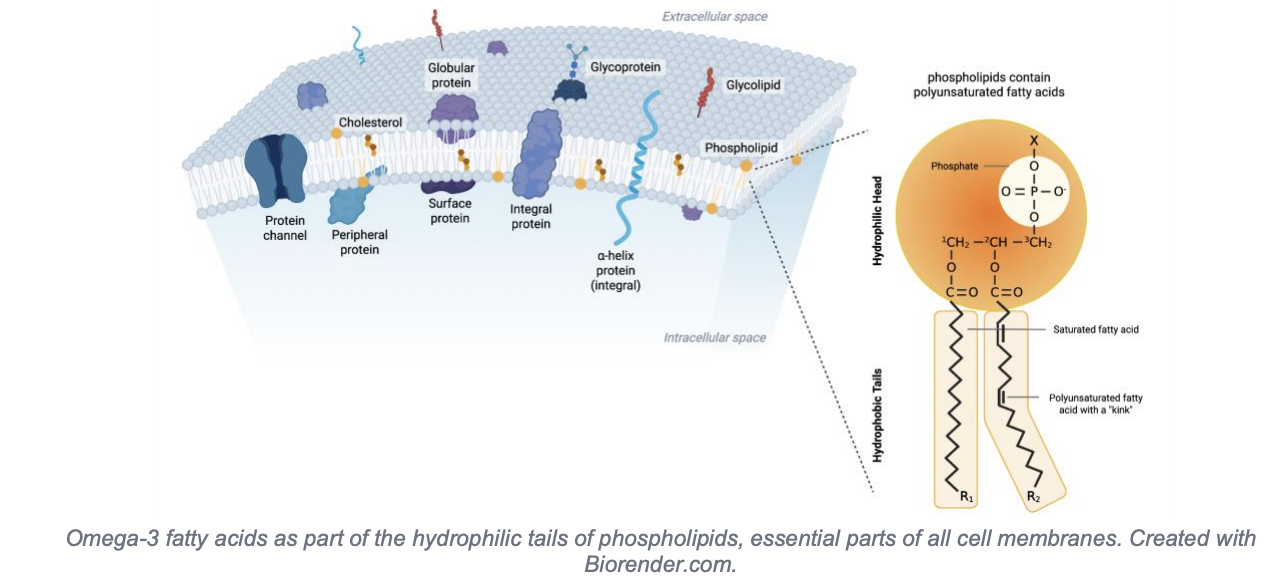
Mechanistically, studies on human cells show that omega-3s can 1) activate the Nrf2 pathway, enhancing endogenous antioxidant enzyme activity; 2) reduce ROS/RNS production via mitochondria-modulating-mechanisms; and 3) increase cardiolipin in mitochondrial membranes. Omega-3 supplementation has an anti-inflammatory effect on pro-inflammatory markers such as CRP, IL-6, and TNF-α. In summary, omega-3s enhance mitochondrial efficiency, suppress oxidative stress and protect the immune system by lowering inflammation factors.
Effect on lifespan extension, telomeres, cardioprotection, and DNA methylation
EPA and DHA supplementation increased the lifespan of fr flies by 15%. Transgenic mice engineered to produce elevated omega-3 levels endogenously showed significantly longer leukocyte telomeres than age-matched controls, suggesting a slower biological clock rather than a one-time protective effect.
Human clinical trials have confirmed a modest but statistically significant benefit on telomere length (Ali et al, 2022; meta-analysis of five RCTs), though effect sizes are small and not all individual trials show significance, a pattern consistent with telomere length being one of several aging mechanisms omega-3s influence, rather than the primary one.
Higher intake of omega-3s has been associated with lower risk of cardiovascular mortality and better physical performance in old age. Circulating omega-3s are associated with an 18% decrease in all-cause mortality (Yan et al, 2025).
The most compelling evidence for human life extension comes from the randomized controlled trial DO-HEALTH, showing that omega-3 supplementation with 1 g/day slowed down epigenetic clocks (Bischoff-Ferrari et al, 2025).
Taken together, the evidence is suggestive and increasingly coherent. Although more robust clinical studies are needed, there is strong evidence to support omega-3 intake as a strategy for healthy aging.
Dosage and Side Effect
Recommended supplements are with at least 50% DHA and EPA per soft gel/capsule. The Minimum recommended dose is 1.5 g of DHA plus EPA daily.
Fishy aftertaste and slight gastrointestinal issues are reported at higher concentrations (>3 g). At such higher concentrations, omega-3 supplements also have a mild blood-thinning effect, increasing the risk of bleeding for people on blood-thinning medication.
Research
Magnesium glycinate is the magnesium salt of the amino acid glycine. Glycine is a small molecule that can cross the blood-brain barrier.
Magnesium is an essential electrolyte involved in more than 300 essential metabolic processes: protein synthesis, muscle and nerve transmission, neuromuscular conduction, signal transduction, blood glucose control, and blood pressure control.
Out of many available magnesium supplements, magnesium glycinate was shown to be very well tolerated and has the highest bioavailability. The organic Mg formulations (glycinate or taurinate) are more bioavailable and are associated with depression symptom alleviation.
Effect on lifespan extension, pleiotropic anti-aging effects
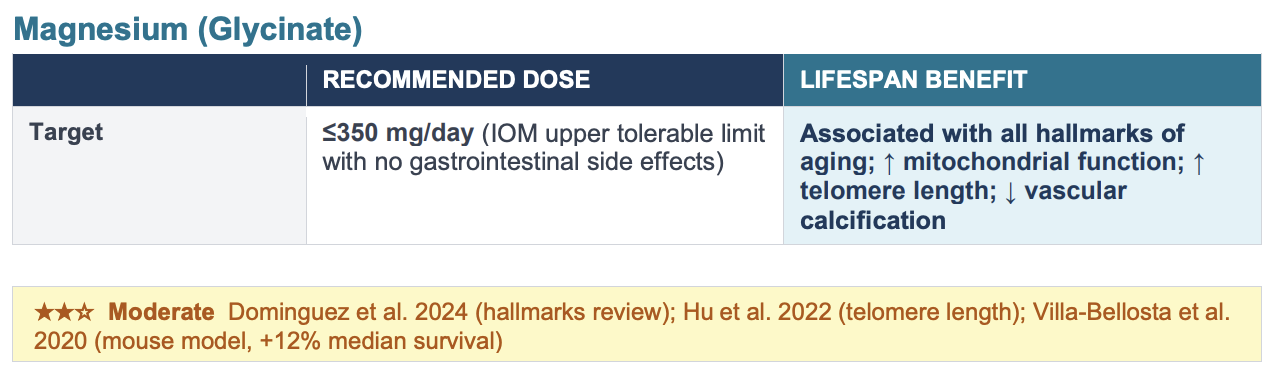
Magnesium is one of the rare micronutrients that has been associated with all hallmarks of aging (Dominguez et al, 2024).
In cultured human fibroblasts, magnesium deficiency accelerates cellular senescence, increases oxidative stress, and impairs DNA replication, suggesting that low magnesium promotes cellular aging (Killilea & Ames, 2008).
In a prematurely aged mouse model, adding magnesium to drinking water improved mitochondrial function, antioxidant status, reduced vascular calcification, and increased median survival for a roughly 12% gain (Villa-Bellosta et al, 2020).
An observational study in older adults found that higher dietary magnesium intake is independently associated with longer leukocyte telomere length, suggesting that adequate magnesium is conducive to longer life expectancy (Hu et al., 2022).
Magnesium deficiency is associated with poor cardio-metabolic conditions, suggesting that avoiding deficiency supports a longer healthspan.
Dosage and Side Effects
The Institute of Medicine (IOM) has set the upper tolerable limit at 350 mg/day (no risk of gastrointestinal side effects in almost all individuals). Individuals with renal impairment are at risk for adverse effects.


Introduction
Beta-alanine is a naturally occurring amino acid produced in our livers and acquired from poultry and meat. It acts as a rate-limiting precursor in the production of carnosine, necessary for carnosine synthesis. Carnosine is a peptide stored in the skeletal muscles, where it acts as a chemical buffer.
Beta-alanine supplementation increases muscle carnosine concentration across demographics and attenuates exercise-induced reductions in pH, particularly beneficial during high-intensity activities (60–240 s). Overall, evidence supports the efficacy of beta-alanine in improving anaerobic performance by enhancing the muscle's ability to buffer hydrogen ions, reducing fatigue, and allowing athletes to sustain high-intensity efforts for longer periods.

Effect on lifespan extension — sarcopenia prevention and metabolic health
Aging leads to a reduction in carnosine levels in skeletal muscles. In cell culture and in one model of accelerated aging mice, carnosine delays aging. Clinical trials show that beta-alanine supplementation combats the loss of physical performance and muscle carnosine in the elderly, acting as a sarcopenia prevention.
A double-blind RCT in 100 older adults (aged 60–80) found that 10 weeks of 2.4 g/day beta-alanine improved MoCA cognitive scores specifically in participants with below-normal baseline scores, consistent with carnosine's proposed neuroprotective role (Ostfeld et al., 2023).
A recent review of human supplementation trials found evidence for benefits across sarcopenia prevention, cognitive preservation, glycemic control, and neurodegenerative disease markers, though most trials remain short, small, and heterogeneous in design.
The overall picture is of a compound with broad, mechanistically coherent anti-aging potential, with the human evidence strongest for muscle function and metabolic health.
Dosage and Side Effect
3–6 g/day, ideally divided into several portions. The only reported side effect is tingling (paraesthesia)
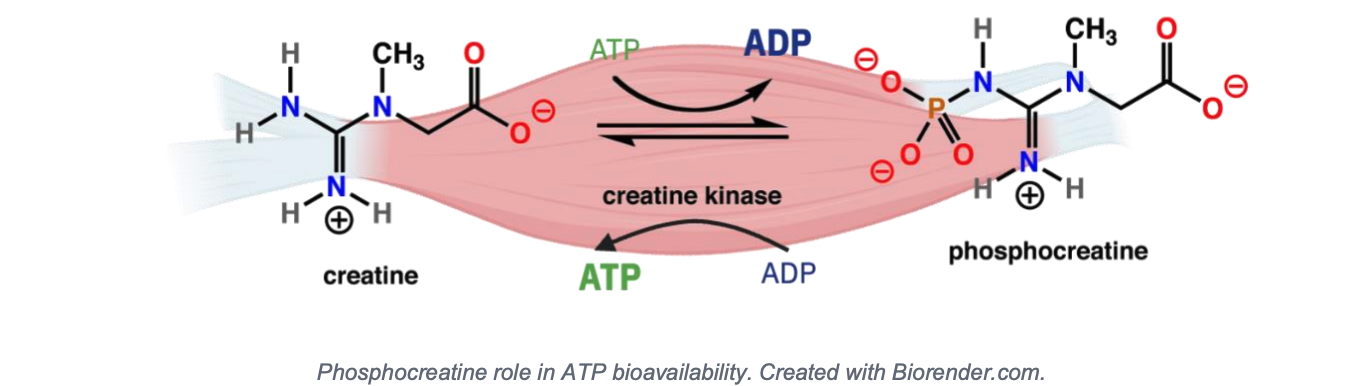
Creatine is a naturally occurring non-protein amino acid compound, primarily found in red meat and seafood. It is one of the most widely used ergogenic aids in sports nutrition. Most of the body's creatine reservoir is in skeletal muscles (95%), the rest in the brain and testes (5%). Creatine belongs to a group of metabolites called phosphagens, which maintain muscle energy availability during high-intensity exercise. Creatine is converted to phosphocreatine in the muscle and, used to regenerate adenosine triphosphate (ATP) within the cell.
Effect on lifespan extension — ATP buffering and neuroprotection
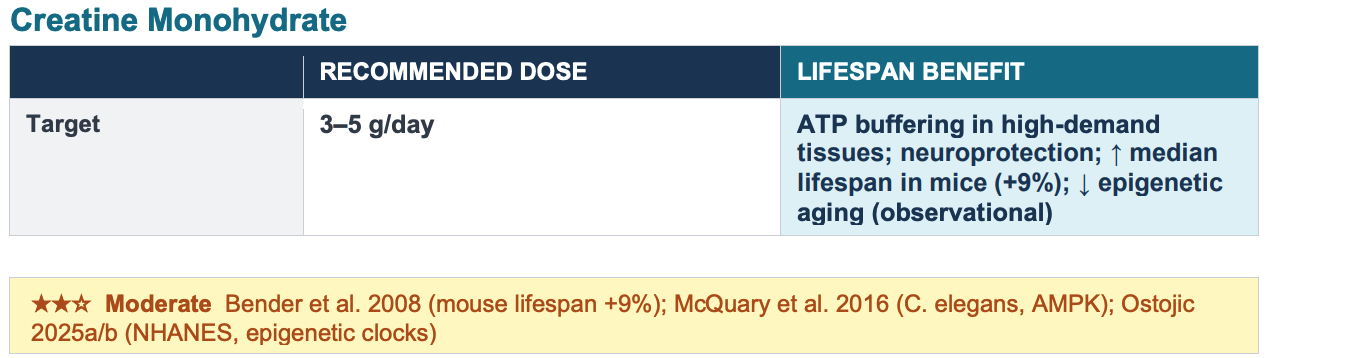
The most direct animal evidence comes from Bender et al. (2008), in which oral creatine supplementation in 162 aged mice increased median healthy lifespan by 9%.
A complementary line of evidence comes from C. elegans, where overexpression of ARGK-1, the nematode ortholog of mammalian creatine kinase, extended natural lifespan by activating the energy sensor AMPK, a conserved longevity pathway (McQuary et al., 2016).
In humans, two 2025 NHANES-based analyses found that higher dietary creatine intake was associated with lower all-cause mortality over a median follow-up of nearly 20 years, and inversely correlated with epigenetic aging clocks in adults aged 50 and above (Ostojic, 2025a; 2025b). Both findings are observational and subject to confounding by dietary pattern; no RCT has yet measured creatine's effect on epigenetic clocks or mortality directly.
The mechanistic case, ATP buffering in high-demand tissues, neuroprotection, is coherent, but the human longevity evidence remains preliminary.
Dosage and Side Effects
Recommended dosage is 3–5 g/day. Randomized controlled studies have reported no damaging effects of dietary creatine on renal function, though individuals with pre-existing renal dysfunction should exercise caution.
Research
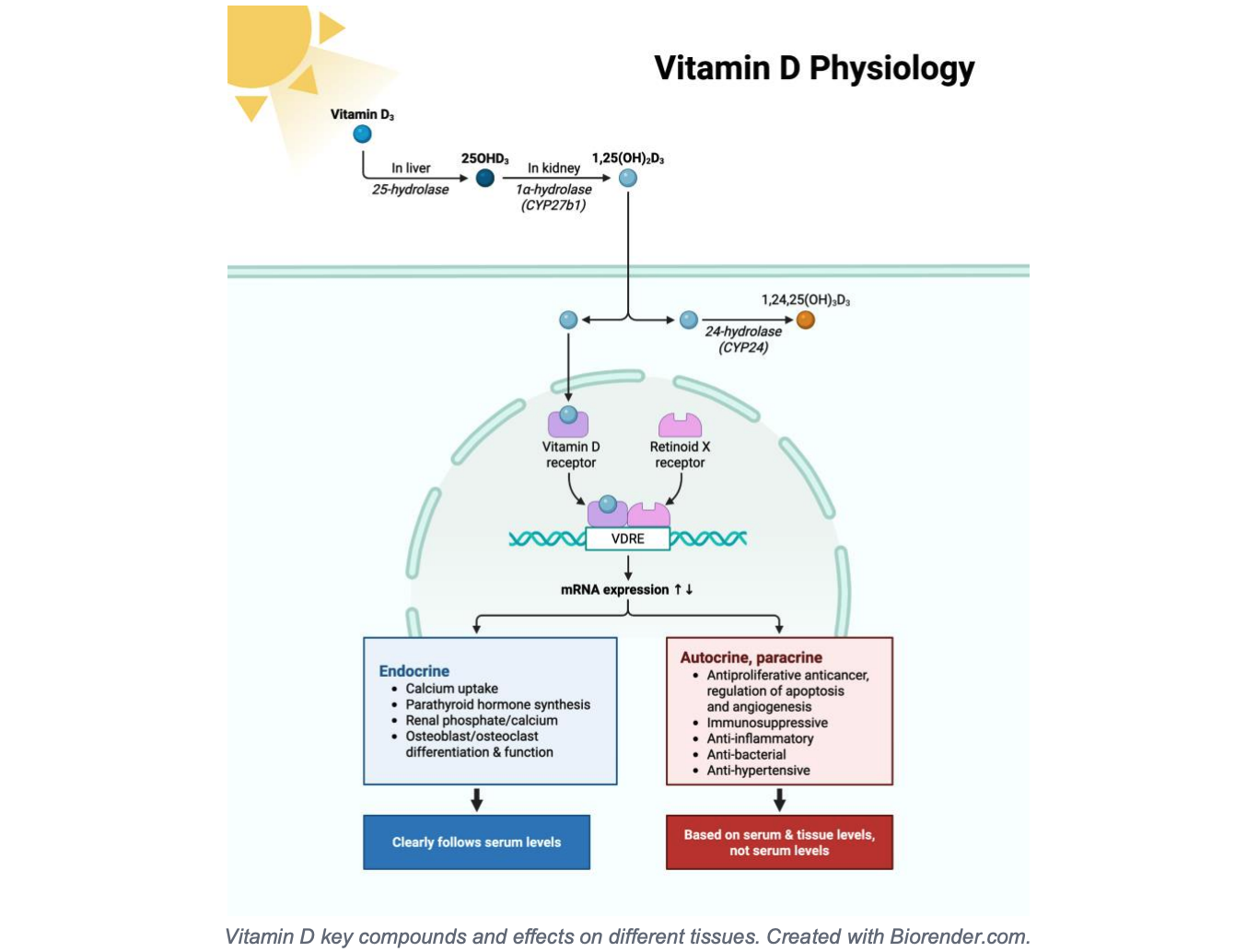
Vitamin D is a group of fat-soluble compounds with a primary role in increasing intestinal absorption of calcium and phosphate. The most important compounds are D3 (cholecalciferol) and D2 (ergocalciferol). D3 is synthesized in the skin after exposure to UVB rays, while D2 originates from plants.
25-hydroxyvitamin D [25(OH)D] is the circulating form of vitamin D, known as calcifediol.
Effect on lifespan extension — protein solubility and telomere length
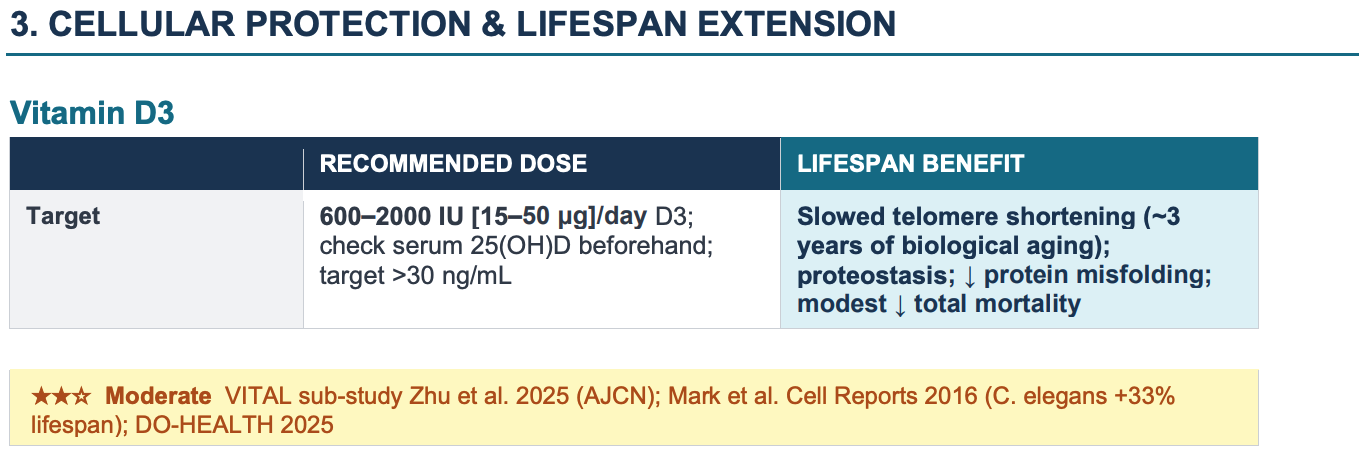
The preclinical evidence is anchored in C. elegans, where multiple independent studies have found consistent effects. Exposure to vitamin D3 significantly increased the lifespan of wild-type worms by up to 39%.
A subsequent study found that vitamin D extended median lifespan by 33% and slowed the aging-related misfolding of hundreds of proteins in the worm. Vitamin D suppressed widespread protein insolubility, a hallmark molecular pathology of aging, and prevented toxicity caused by human β-amyloid, suggesting a role in proteostasis that may be conserved across species (Mark et al., Cell Reports, 2016).
In humans, the most compelling recent evidence comes from a 2025 sub-study of the VITAL trial, in which four years of daily vitamin D3 supplementation significantly reduced telomere shortening in leukocytes, to an extent estimated to correspond to approximately three years of slowed biological aging (Zhu et al., AJCN, 2025).
In the DO-HEALTH trial, vitamin D alone was not associated with changes in epigenetic clock measures of biological age, though combining it with omega-3 supplementation and exercise additively reduced biological age as measured by the PhenoAge clock, suggesting vitamin D's longevity effects may be most meaningful as part of a combined intervention (Bischoff-Ferrari et al, 2025).
At the population level, meta-analyses indicate a modest reduction in total mortality among older adults with vitamin D supplementation, particularly in those who are deficient, though the 2024 Endocrine Society guidelines stopped short of recommending universal supplementation for longevity purposes.
The overall picture is of a vitamin whose deficiency clearly accelerates aging-related pathology, and whose repletion, particularly via the proteostasis and telomere maintenance pathways, plausibly slows it.
Dosage and Side Effects
Vitamin D3 is the choice for replacement therapies to maintain serum levels of 25(OH)D greater than 30 ng/mL. A daily dose between 600 IU [15 μg] and 2000 IU [50 μg] should suffice, but it's important to check your levels of 25(OH)D beforehand.
Oversupplementation can lead to vitamin D toxicity, which results in hypercalcaemia, an excess of calcium in the blood. This is why it's important to test the serum concentration of 25(OH)D regularly.