



Cryopreservation gets treated as pass or fail: either someone was preserved or they were not. The reality is a spectrum, and a handful of specific obstacles decide where a case lands on it.
None of them is mysterious. Each is a concrete engineering problem, and each is being worked on.
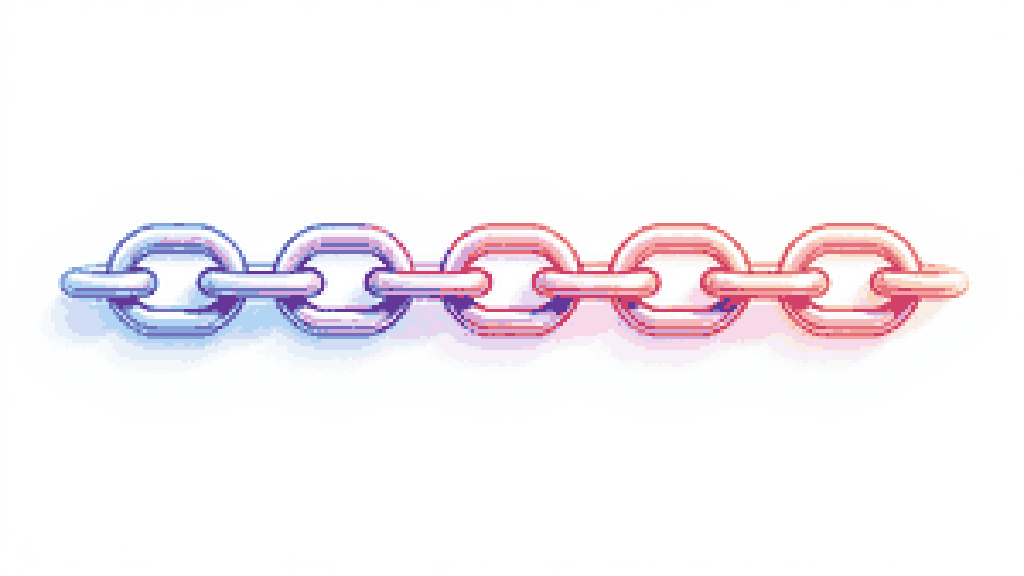
The chain, in the order it happens
The five obstacles below are a sequence rather than a list. Each follows the last, and a failure early makes every later one worse.
Time, because ischemia never pauses
From the moment the heart stops, the brain suffers ischemia. Every current patient experiences some. The only question is how much.
With no standby team present, a case can involve hours of cold ischemia preceded by warm ischemia, which is far more destructive.
The field now measures this rather than describing it, through metrics like S-MIX. Time is by a wide margin the biggest lever on quality, and the whole race against cellular decay is organized around shrinking it.
No-reflow, the problem the delay creates
Ischemia leaves an aftereffect. Once tissue has been starved for a while, you often cannot simply push fluid back through it.
The microcirculation resists re-perfusion. In studies of delayed perfusion, neither anticoagulants beforehand nor clot-dissolving drugs afterward restored flow.
So the blockage is not mainly clotting. It is structural: endothelial cells swell inward, fluid in the surrounding tissue compresses capillaries, and blood cells stiffen enough to plug what remains.
If the solution cannot reach tissue evenly, parts of the brain go unprotected no matter how good the solution is.
Ice, and the body's most inconvenient property
A human body is roughly 60% water, and water expands about 9% when it freezes, forming ice mostly in the spaces between cells.
That crushes cells mechanically and draws water out of them osmotically. Preventing it is the entire reason for vitrification instead of freezing.
But vitrification is only as good as the distribution of cryoprotectant through the tissue. Anywhere the agent fails to reach, ice can still form.
Toxicity, and the narrow band between two harms
The agents preventing ice are toxic at the concentrations required, and tissue can also suffer chilling injury on the way down.
Concentration has to be high enough to vitrify and low enough not to poison. Cooling has to be fast enough to outrun ice and controlled enough to avoid thermal stress.
Widening that band is what generations of solution chemistry were for, and the history of the procedures is largely a history of widening it.
Fracturing at the deepest cold
Vitrified tissue sits in a glass-like state, and that state can crack under enough thermal stress.
Cooling all the way to -196°C can introduce microscopic fractures, so the cooldown is run as gradually as the schedule allows.
This is one reason the field is developing intermediate temperature storage, holding patients below the glass transition but warmer than liquid nitrogen.
Why quality genuinely varies between people
Put the chain together and something uncomfortable follows. Two members who sign the same contract can receive measurably different preservations.
The difference is rarely the protocol. It is the circumstances the protocol had to work in.
An anticipated death with standby in place can move from arrest to cooling in seconds. An unwitnessed death far from a team cannot.
Some deaths legally require an autopsy first, and some rule out preservation altogether. Those are set out in when you cannot be cryopreserved.
Transport adds its own hours, which is why logistics and red tape belong to the technical subject rather than the administrative one.
The right response to that variation is not a uniform marketing promise. It is measurement, disclosure, and quality-check procedures recording what actually happened in each case.
A member is owed the real number, including when the real number is disappointing.
What is actually getting better
Every link in the chain is an active research target, and none of the five sits where it did a decade ago.
Solutions are less toxic. Protocols reach patients faster. Measurement has moved from adjectives to metrics.
Intermediate temperature storage attacks fracturing directly, and the storage facility is built around holding conditions stable for decades.
The work is described in advancing the field and our research and development initiatives.
What has not changed is the shape of the problem. Reach the patient fast, restore circulation, distribute the protectant, vitrify without excess toxicity, cool without fracturing.
Each of those is still a place where a case can be lost, and the outcome is set by the weakest link rather than the strongest.
TL;DR: Preservation quality depends on limiting ischemia, restoring circulation, distributing cryoprotectant evenly, controlling toxicity, avoiding ice and managing thermal stress. Weakness in any step can reduce the result.
Further reading